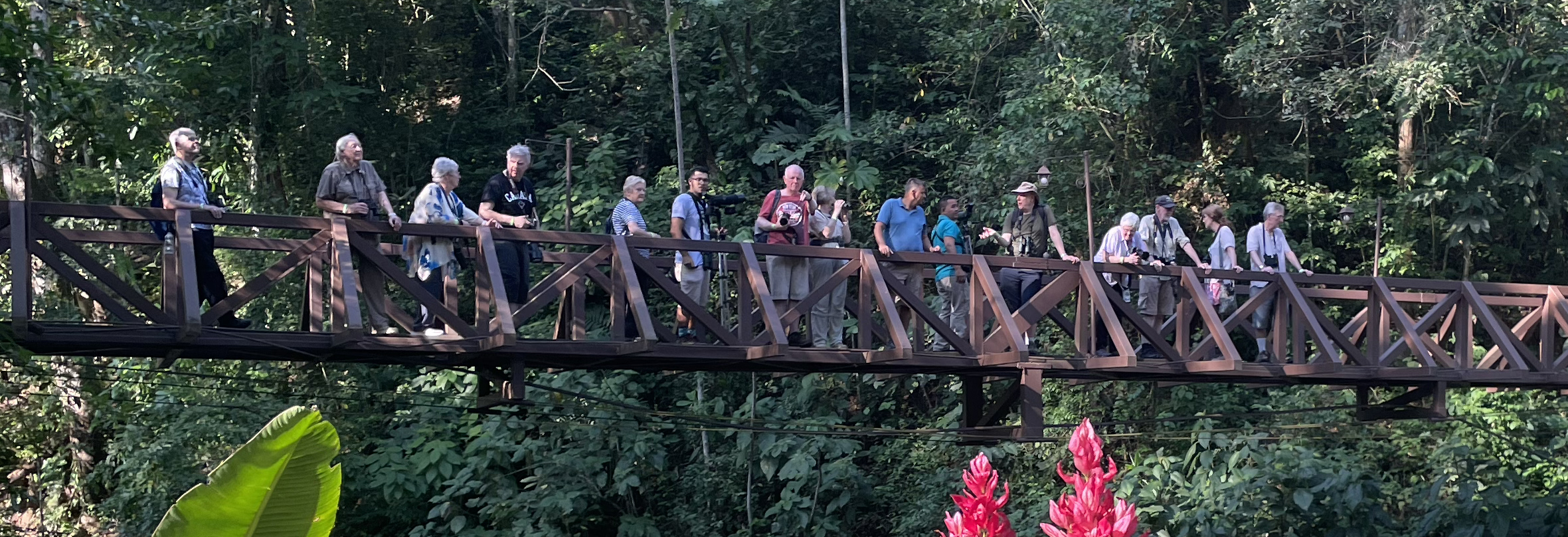
If you’re a new birder, going out with a group has distinct advantages, including having more experienced birders pointing out birds and describing them, learning first-hand about places to go, and meeting others with the same interest as yourself. To get the most out of group birding, it is useful to follow the following ‘do’s’ and ‘don’ts’.
Stay near the leader(s). Group walks will have birders at a variety of skill levels, and most walks will have a leader with other experienced birders helping out. If the group is large, it will undoubtedly get spread out. To get the most out of the walk, stay near the leader or one of the co-leaders. And I do mean very near. When a bird is spotted, don’t be shy, and get right next to (or right behind) the person who is pointing out where the bird is located; the leader will be looking for the clearest vantage point, so if you are even 5 or 10 feet away, you might have a tree or a rock or some obstruction that could prevent you from seeing the bird. Plus, staying close to the leader will make it easier to hear descriptions of the bird and allows you to ask occasional questions that will make the walk more enjoyable.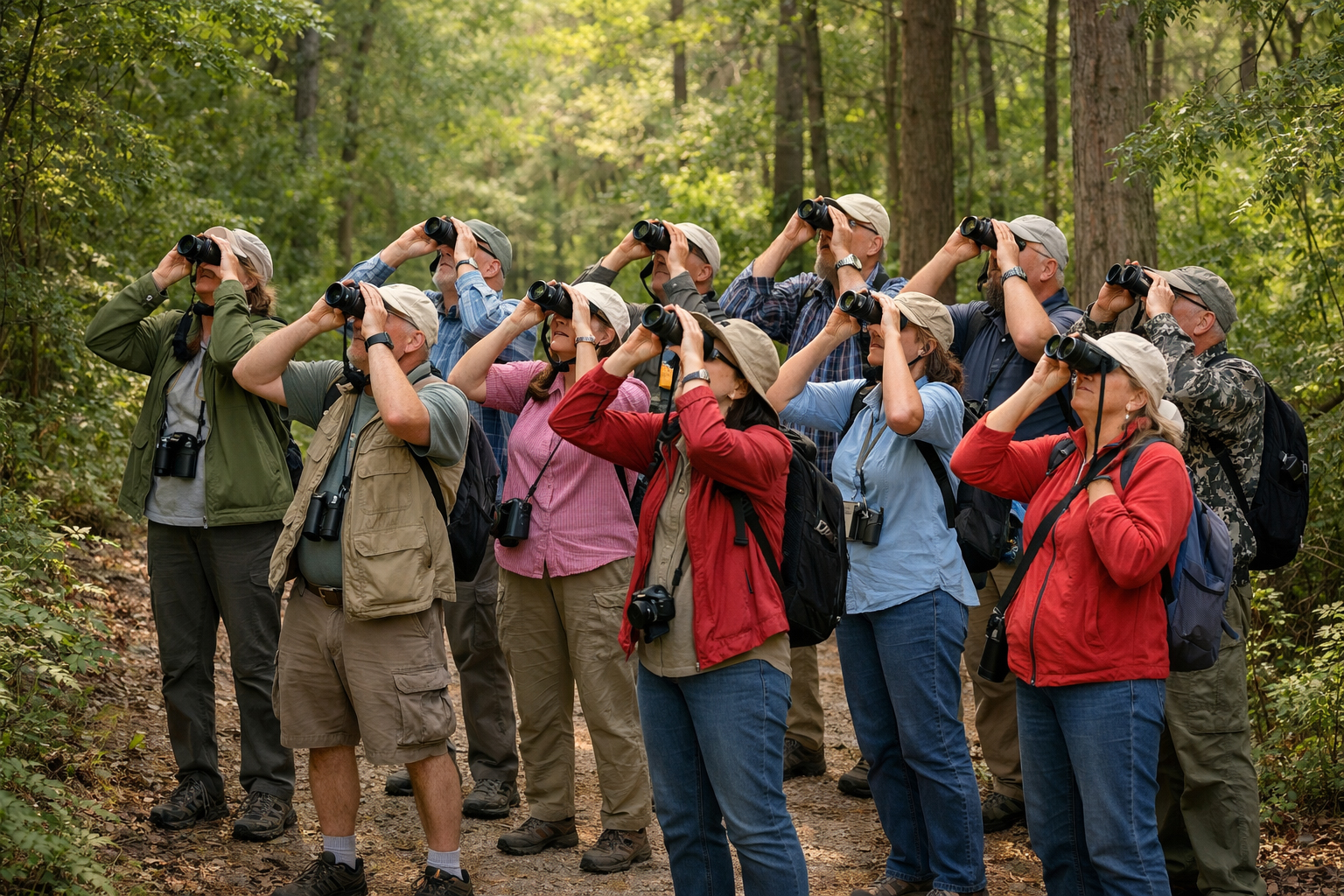
Don’t get ahead of the group. The leader should be leading the walk, not other participants. They will be listening and watching for birds that are in front of the group, so participants venturing ahead risk spooking those birds. Let the leader set the pace and the route and follow them, even if you are anxious to see something further ahead.
Keep noise and chatter to a minimum. You certainly are allowed and encouraged to ask questions during walks and to chat with other participants, but realize that the leader and other experienced birders will be birding by ear, so be judicious and keep the volume low to allow them to hear the sounds and to prevent spooking nearby birds. It is also a good idea to walk as quietly as possible, not creating additional noise by dragging your feet through leaves or kicking downed branches, and by all means, put your phone into silence mode.
Watch what others are doing. Group walks can be a way to learn good birding habits. Some might be subtle, like how to dress for comfort, what to bring, how to combine birding and photography, or how to describe where a bird is being seen. Look for good habits and emulate them.
Keep track of the route. Some birding walks will follow a wide obvious track or trail, but others might not. If it is a successful outing you likely will want to return by yourself in the future, so use one of the many GPS apps to track and keep records of your route.