The times they are a-changin’.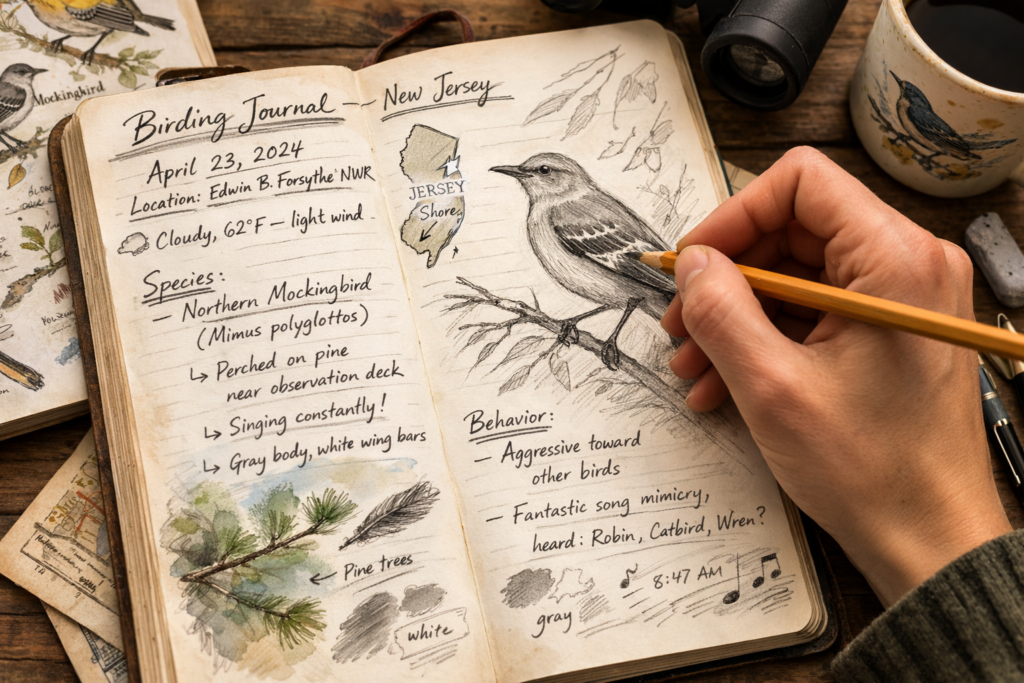 If we step back into a birding time machine to a few decades ago, the advice that you’d be given was that when you see a bird, you should draw it in your field notebook. That method forces you to observe all the details of the bird’s plumage pattern and overall structure. It was good advice.
As cameras became more easily used by the general population due to the combination of digital storage, better lenses, and autofocus technology, bird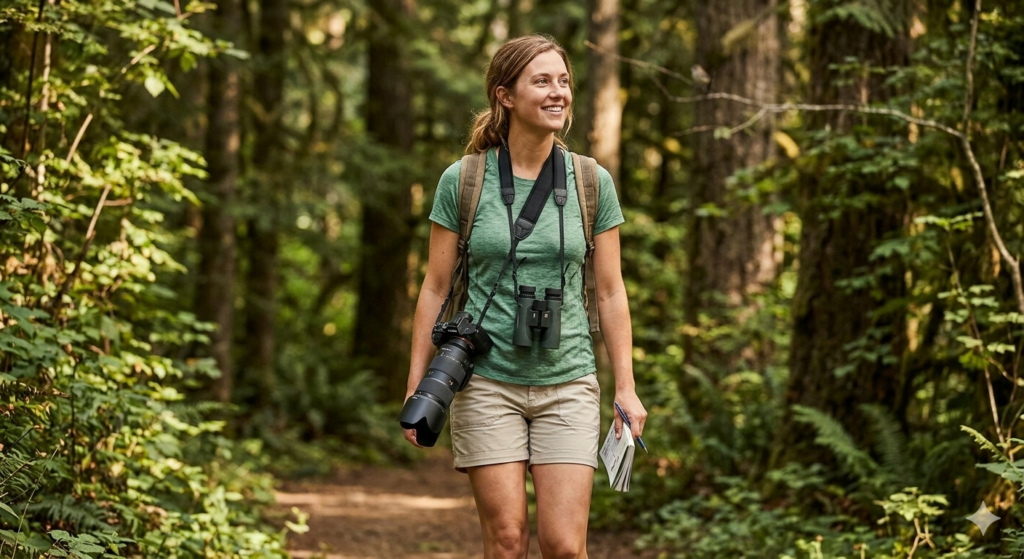 ers increasingly carried binoculars to find birds, then used cameras to document rarities and to share their hobby with others. Again, that was a step in the right direction, providing undeniable evidence of what was seen instead of lengthy descriptions. Now it is becoming increasingly common to see birders cutting out the ‘middle man’ of binoculars, carrying only cameras into the field. To some of us old-school birders that seems borderline sacrilegious. After all, you’re supposed to study the birds in detail, and you can’t do that with a camera, can you? Surprisingly, with the onset of a new generation of camera technology, I believe the answer to that question is now ‘yes, it can be done’.
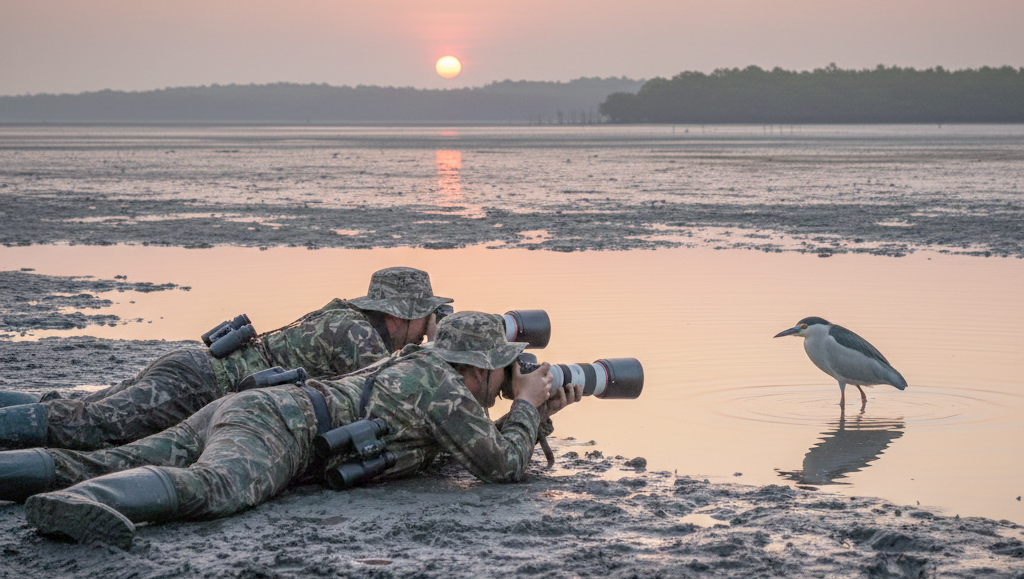
The advantages of birding with only a camera are clear, in that it saves the cost of buying high end binoculars and increases the comfort level by cutting down on the weight and effort of carrying two sets of optics into the field. Not to mention avoiding the tangle that can occur when having two sets of straps or additional camera carriers. Importantly, in those cases where a perched bird is seen briefly, an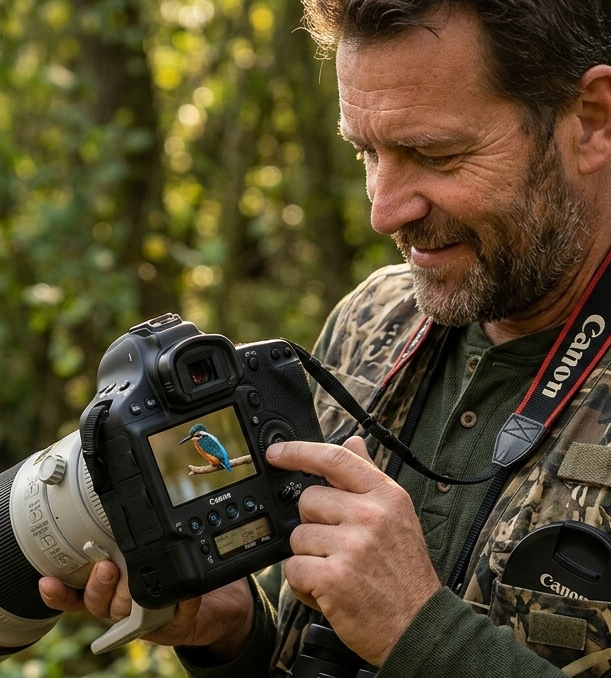 d then flies off, the person using only a camera will have a documentation shot while the person who was switching from binocular mode to camera mode just missed a golden opportunity. Or how about the quick fly-by raptor; the skilled photographer will get flight shots that could definitively identify the bird while the old-school birder with binoculars can only describe what he thinks he saw. Using the screen or the viewfinder immediately to examine the electronically zoomed-in image allows details to be seen, frozen in time on the memory card, for even further study at a more convenient time. Surprisingly to me, the ability to zoom in digitally on an image in the newest cameras can equal or even surpass the ability of 8x binoculars. It is not uncommon in my experience, for example, to spot a distant perched hawk that can not be distinguished using binoculars, then take a photo of it, zoom in on the image, and be able to view details that are not visible using bins. It’s quite amazing. Moreover, observation of behaviors and noticing details of the bird’s plumage or structure can certainly occur while looking through the viewfinder, so it’s not purely a matter of photography OR birding. They can both be done at the same time through the camera.
The ‘danger’ inherent in this shoot-first-and-ask-questions-later strategy is the temptation to just shoot and shoot and shoot photos continuously with absolutely no thought in the field or after arriving home and sorting through a bevy of photos. It’s difficult to see how much learning occurs using that approach. The level of education will be dependent on how much restraint or discipline the photographer/birder (‘photograbirder’?) has and how much they want to learn. In any case, we’ve entered a new world of birding, thanks to improved camera technology. There’s many ways to go birding, so choose what is right for you.